Learning to Ride
Many children learn to ride in their parents’ or grandparents’ garden, but not everyone has a suitable space available. For small children, a balance bike (one with no pedals) enables them to get along and find their balance gradually. With a balance bike, a child can be very mobile by the age of three, with pedalling coming soon after.
One of the key aspects of learning to ride is to find a suitable location, ideally somewhere paved, flat and with little or no traffic. In Goring this could be the Sheepcot car park when it’s empty, or the quiet end of Manor Road or Croft Road. See the Starters page for more details.
Some of the best resources for learning to ride or teaching another are those produced by the two national cycling organisations, British Cycling and Cycling UK.

British Cycling is the national governing body for cycle sport in Great Britain and selects the GB teams for the Olympics and World Championships. British Cycling has a set of short YouTube videos about teaching a child to ride under its Ready set Ride initiative.

Cycling UK is a charitable membership organisation supporting cyclists and promoting bicycle use, founded in 1878 as the Cyclists’ Touring Club.
Cycling UK has videos, advice and inspirational stories for both adults and children.
Growing Family
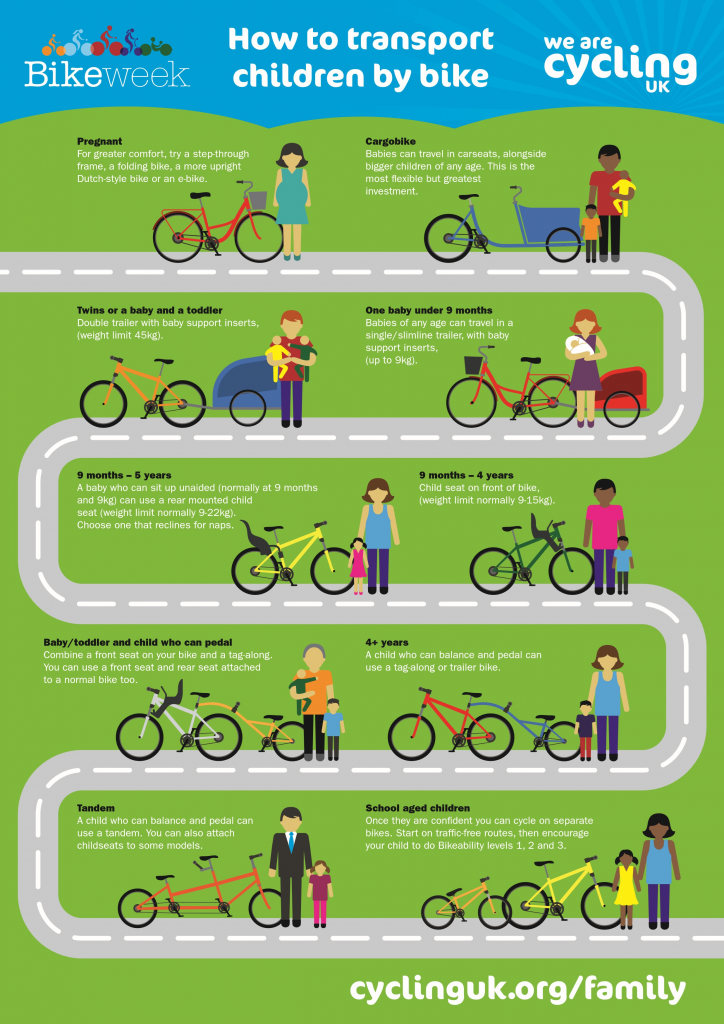
Knowing when to replace or upgrade bikes as children grow can be confusing. Cycling UK has lots of useful advice, from the route map infographic to advice and videos on all aspects of family cycling
What to wear
There are no rules about what to wear for cycling, just two important guidelines, safety and comfort.
Safety
Don’t wear loose clothing that could get caught in the bike’s chain or wheels, such as flappy trousers or long skirts. No one wants to come off the bike unintentionally, but if you do, some protection will minimise injury, which is why many cyclists wear a helmet.
Comfort
Comfort is key, and comfortable clothes will also help you stay safe. Avoid clothes that have seams in uncomfortable places, such as denim jeans, or that rub or chafe.
Multiple layers are a good idea for longer rides, to enable you to adjust as you warm up or as the weather changes. Breathable fabrics and tops with zips are good. A waterproof top is an essential accessory, as riding when soaked is miserable. Shorts work well for English summer conditions, as skin dries quicker than fabric.
Many cyclists wear mitts with padded palms (gloves in winter). These provide cushioning on your handlebars, but are very handy should you lose your balance and come into contact with tarmac or gravel.
For more in-depth information about what to wear, see Cycling Weekly’s beginner’s guide to biking in comfort without ever having to step foot in a bike shop.